Requests arrive here worded as though the choice were cosmetic. Same rock, same huts, same idea of walking from one bed to the next without a car. And the geology really is close: both ranges are marine limestone lifted and cut, both hold pale towers that go pink at either end of the day, and the closest points of the two sit about 90 miles apart across one border. Somebody who liked a photograph often cannot say which range it came from, and neither can we, and that is fair.
What the request almost always leaves out is how many other people will be on the path, and how the answer to that changes the price, the booking window, the language spoken at the counter, and how far the drive is from the plane. Those five things do not move independently. They move together, and they move for one reason.
The two halves, set on the same axes
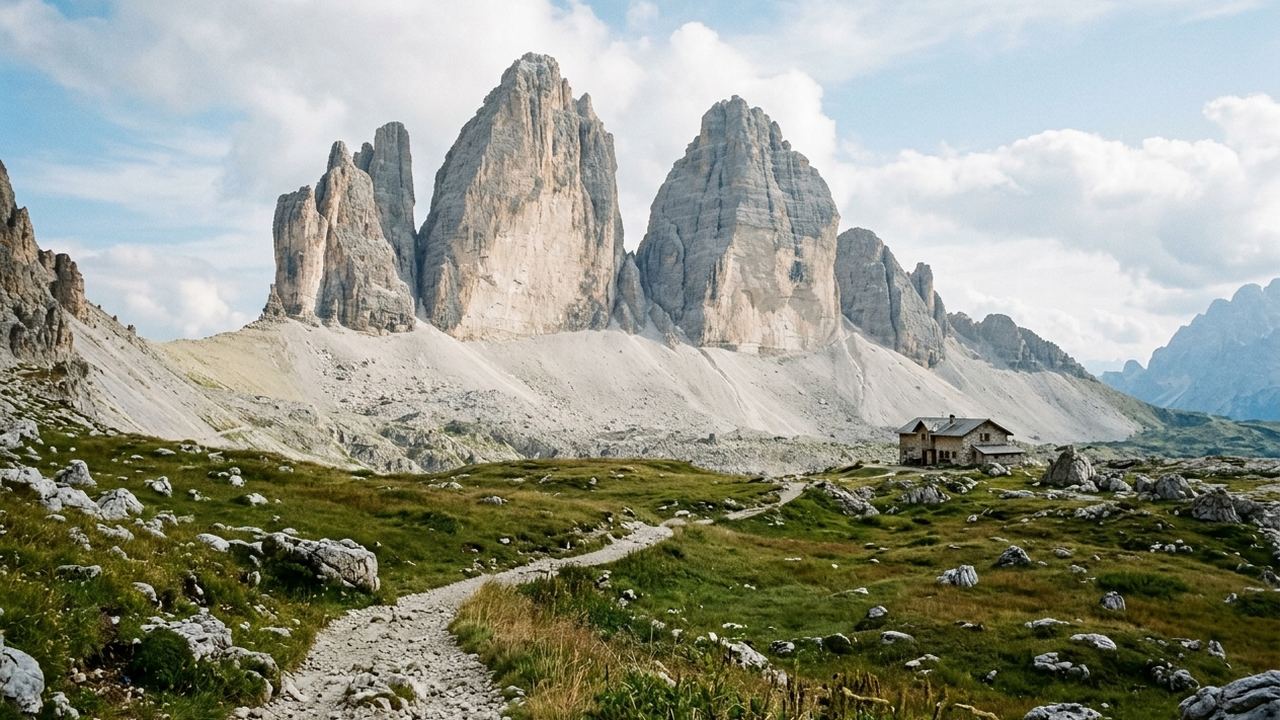
dolomites
The Dolomites sit about 3.5 driving hours from Venice and 2 hours from Innsbruck, with paved roads reaching most trailheads; the Julian Alps are roughly 2 hours from Ljubljana with fewer valley roads. Rock here is pale limestone in near vertical towers, and daily ascent on this route runs 1,800 to 3,200 feet. Beds are in staffed huts with dormitories and a fixed dinner hour, not in hotels. Huts open roughly late June to late September, and July and August fill months ahead. This trip is $3,240 per person for eight nights.
from $3,240 per person
julian alps
The whole range is about 340 square miles against roughly 55 square miles of Dolomite country in the same limestone family, and it holds around 30 staffed mountain huts against several hundred; the trailhead is 45 minutes by road from Ljubljana against two and a half to four hours from the nearest large airport on the Dolomite side; walking days here run 5 to 8 hours with 2,300 to 3,900 feet of ascent, against the 3 to 5 hour hut spacing common on the Dolomite high routes; the floor is $2,760 for eight nights here and quoted separately for the Dolomite week; hut staff speak Slovene and German first, with English varying by hut.
from $2,760 per person
Two figures set beside each other are two facts about two different trips of different lengths, run by different companies, in different seasons. Neither figure is offered as the better value and this office will not say that one is. What each covers is listed on its own page.
Ten times the feet on the same kind of rock
The Dolomites take somewhere in the region of nine to ten million overnight stays across the summer season. The Julian Alps take a fraction of that, and Triglav National Park counts its summer visitors in the low hundreds of thousands. Call it a factor of ten on similar terrain and similar mileage. That is the axis, and it is not a quality judgment about either place. It is a crowd count.
On the ground it looks like this. In the Dolomites in late July and August, a well known refuge fills its beds six to eight months out, the cable car queue at 9 a.m. runs twenty to forty minutes, and the parking areas at the popular trailheads are full by 7:30 a.m. In the Julian Alps in the same weeks, most huts take bookings four to eight weeks out, weekday sections of trail can run an hour or more without meeting anybody, and the pinch points are two or three specific summits rather than the whole range.
The reverse of that is service density. Ten times the people has built ten times the infrastructure: more huts, closer together, more staffed days per season, more of everything that makes a walking day short and soft if you want it short and soft. Fewer people has left longer gaps between beds. Both are true at once and neither is a fault.
The five things that decide it for everybody else
Peak weeks of mid July to late August run near capacity across the well known valleys, with popular refuges booked six to eight months aheadHigh season traffic
The same weeks fill two or three named summits while most trail sections stay open, with huts commonly bookable four to eight weeks ahead
Roughly 3 to 5 hours of walking between staffed huts on the main circuits, so a short day is genuinely availableHut spacing
Commonly 5 to 8 hours between staffed huts, and some linking days have no bed in the middle at all
Half board in a staffed refuge generally runs about 65 to 90 US dollars per person per nightNightly cost
Half board in a staffed hut generally runs about 40 to 60 US dollars per person per night
Widely spoken at huts, valley hotels and lift stations, with German and Italian both in daily useEnglish on the ground
Widely spoken by younger staff and in the Bled and Bohinj valleys, thinner at remote huts where Slovenian and some German carry the day
About 1.5 to 2.5 hours by road from Venice or Innsbruck, with scheduled bus links to several valley towns in seasonAirport to trailhead
About 40 minutes to 1.5 hours by road from Ljubljana, which is the closest airport to any walking start in this comparison
Dense waymarking, numbered routes, an unusually thick network of via ferrata, and a long established rescue structureTrail marking and rescue
Waymarking is consistent and red and white, route numbering is sparser, and some approaches use cable and pin sections that read as harder than their grade
Valley towns every 10 to 20 miles with shops, pharmacies, laundry and lift access for a rest dayResupply and rest days
Two main valley bases serve most of the range, so a rest day usually means returning to Bled or Bohinj rather than stepping into the nearest town</p>
Where this question is pointing somewhere else entirely
Some of the people who write in are not really choosing between two ranges. They have described a walking trip because that is the vocabulary they have, and what they want sits next to it rather than inside it.
Handing this back with the numbers attached
We are not going to tell you which one to walk, and we do not think anybody at a desk can. The difference between ten million overnight stays and a few hundred thousand is a difference in what you want from a week, not a difference in which range is the good one, and only you know whether the thicker hut network or the longer empty stretches is the thing you came for. What this office will do is put both trips in writing against your own dates: the nightly figures, the actual hut availability in your week rather than in an average week, the road time from whichever airport you would fly into, and where the gaps between beds fall on your itinerary. Both on one sheet, same format, same dates, so the comparison is yours to make rather than ours to make for you. Write to the desk with the weeks you are considering.