Ask ten people in Charlotte what Spain looks like and nine describe somewhere brown. The request to book a walking week in the Picos de Europa usually arrives carrying that picture: white villages, dry hills, a terrace at four in the afternoon. What arrives instead is a limestone range that catches weather straight off the Bay of Biscay, twenty miles away, and holds it. Beech woods to about 4,000 feet. Grass that stays green in August. Rain measured in the fifties and sixties of inches a year, which is more than Charlotte gets, in a country most Americans file under sun.
That is not a warning. It is the reason the range looks the way it does. Water on limestone makes gorges, sinkholes and springs that come out of a cliff face at full volume, and the Cares gorge exists because of it. But it does mean the week you get is not the week in the brochure photograph, and the office would rather you know that in writing than find it out on day two.
The other thing to say early: we sell both of the Spanish walking weeks people ask about, this one and the Alpujarras. We are not going to tell you which is yours. We will put the numbers side by side and you decide.
- What the week is
- Two bases, four nights in the Cares valley and three in the Sella side, walking on six days, with one cable car ascent and a rest day that most people spend low.
- What sets it apart
- The Picos sit about 20 miles inland from the Atlantic and take roughly 55 to 65 inches of rain a year; the Alpujarras sit on the dry southern flank of the Sierra Nevada, around 30 miles from the Mediterranean. Days here run 2,300 to 4,600 feet of ascent on limestone, karst and scree; the walking week in the Alpujarras is built on old irrigation channel paths and mule tracks with gentler daily gain. July and August here are the two most reliable months and are the ones that fill first; the southern week runs longest in spring and fall because midsummer heat pushes walkers to dawn starts. This week is $2,340 per person against the Alpujarras week's own floor, and includes one cable car ascent, which the southern week has no equivalent of.
- What the figure covers
- Seven nights in two family run guesthouses, rooms with private bathroom; breakfast daily and five evening meals; luggage moved between the two bases once; a licensed mountain guide on five of the six walking days; one return cable car ticket at Fuente De; a printed route book with distances, ascent in feet and bail out points; airport pickup and return from Asturias or Santander on fixed times.
- What it leaves to you
- Flights and any transport to northern Spain; two evening meals and all lunches; drinks with meals; the sixth walking day, which is unguided by design; a second cable car ride if you want one; taxis on the rest day, including the run to the Cares gorge trailhead if you take it; tips; anything you buy in the villages; and any change of dates once the written figure is accepted, which is quoted separately.
- Who this one is wrong for
- Anyone who wants dry heat and dependable sun for seven days straight; anyone who does not want to be walking uphill for two to three hours at a stretch on loose limestone; anyone who will not drive or be driven on single lane mountain road with blind bends between the two bases, about 1 hour 40 minutes; and anyone traveling between mid November and late March, when high routes hold snow and the cable car closes on wind.
Limestone underfoot, and what that does to a day
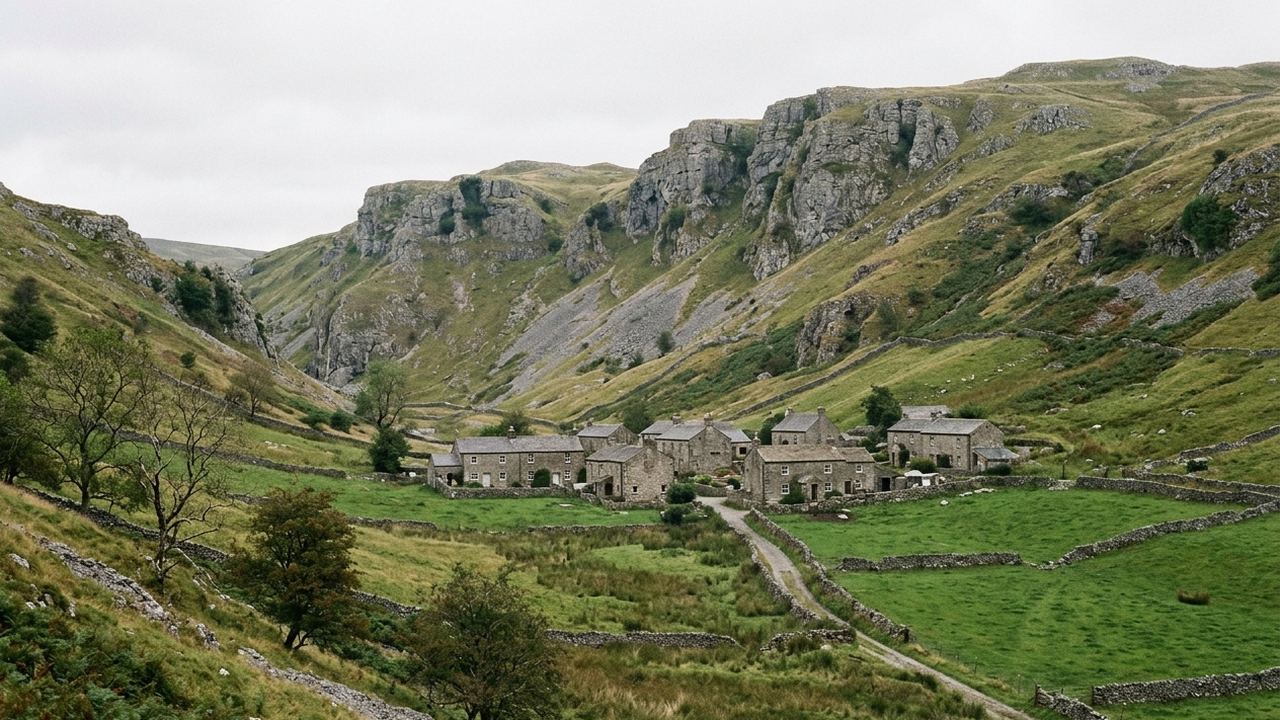
The rock here is karst, which means it drains from the top down and is fluted, pitted and sharp where it is bare. Above the tree line you walk on pavement that has been dissolved into blades and hollows, on scree where the blades have broken up, and on grass that fills the sinkholes between. Ankle turning ground rather than slipping ground. It rewards looking down.
Daily ascent runs 2,300 to 4,600 feet, with the two biggest days built around the Fuente De cable car: the car lifts you about 2,500 feet in four minutes and you walk from the top station, which is the only day where the climbing is done for you. Distances are moderate, 6 to 10 miles, and the hours are long anyway, because 1,000 feet an hour is a decent rate on this surface and nobody keeps it up all day. Expect seven hours out on the big days including stops.
The Cares gorge day is different again. It is a ledge path cut into the wall of a canyon roughly 1,300 feet deep, almost flat for 7 miles, with tunnels and no barrier on the drop side for long stretches. Flat, exposed, and busy from about ten in the morning in high summer. We start it early for the second of those reasons.
Arriving here having asked for somewhere else
Roughly a third of the people who write to us about this week were describing something else in their heads. That is normal and it is fixable in one conversation.
Twelve months on the north side
Weather here is maritime and it sits rather than passes. A front can park for three days. That is why the fill pattern is so lopsided: the two months with the most settled air are the two months everybody wants, and the guided departures in them close early.
- March to mid April
- Snow above 5,500 feet, cable car closes on wind, low routes only
- Late April to June
- Green, wet, wildflowers, meltwater in the gorges, thin crowds
- July and August
- Most settled air, valley highs in the high 70s, gorge path busy by mid morning, books out first
- September
- Warm days, cooler nights, sea fog returning, the quietest good month
- October
- First snow possible on the tops, beech woods turning, rain rising
- Mid November to late March
- High routes under snow, week not sold
From your message to a written figure
- 1. You write
- Tell us the month, how many of you, and what you want the walking to feel like. A message is opened before the working day ends.
- 2. We check ground
- We confirm guesthouse rooms in both valleys and guide availability for your dates, and say plainly if the month you named does not work for the routes you described.
- 3. You get a figure
- A written figure, itemized, showing what is in the $2,340 and what is not. Two to four working days.
- 4. You decide
- Nothing is held until you say so, and nothing is paid on this site.
Ask us the awkward one
If your real question is whether this or the Alpujarras is the right week for you, ask it. You will get both sets of numbers, the rainfall, the ascent, the driving and the price, and an office that will not pick for you.