Two requests arrive at this desk in almost the same words: a week of walking in Spain, mountains, village to village, nothing technical, somewhere to eat properly at the end of the day. Both the Picos de Europa or the Alpujarras answer that description, and people ask for them interchangeably because the photographs look like cousins. Stone villages stacked on slopes. Paths that were mule tracks before they were anything else. Peaks in the background that nobody is proposing to climb.
What the request almost never contains is a month. And the month is not a detail here, because these two weeks barely share a calendar. One is a high summer proposition that is snowbound or fogbound for much of the rest of the year. The other is at its worst in high summer and at its best when the first is already closed. People who arrive assuming they are choosing between two versions of the same holiday are usually choosing between July and November without knowing it.
The second thing the request leaves out is how much climbing per day the walker actually wants. Both weeks are described as moderate by anyone selling them. The numbers underneath that word are not the same.
The two halves, set on the same axes
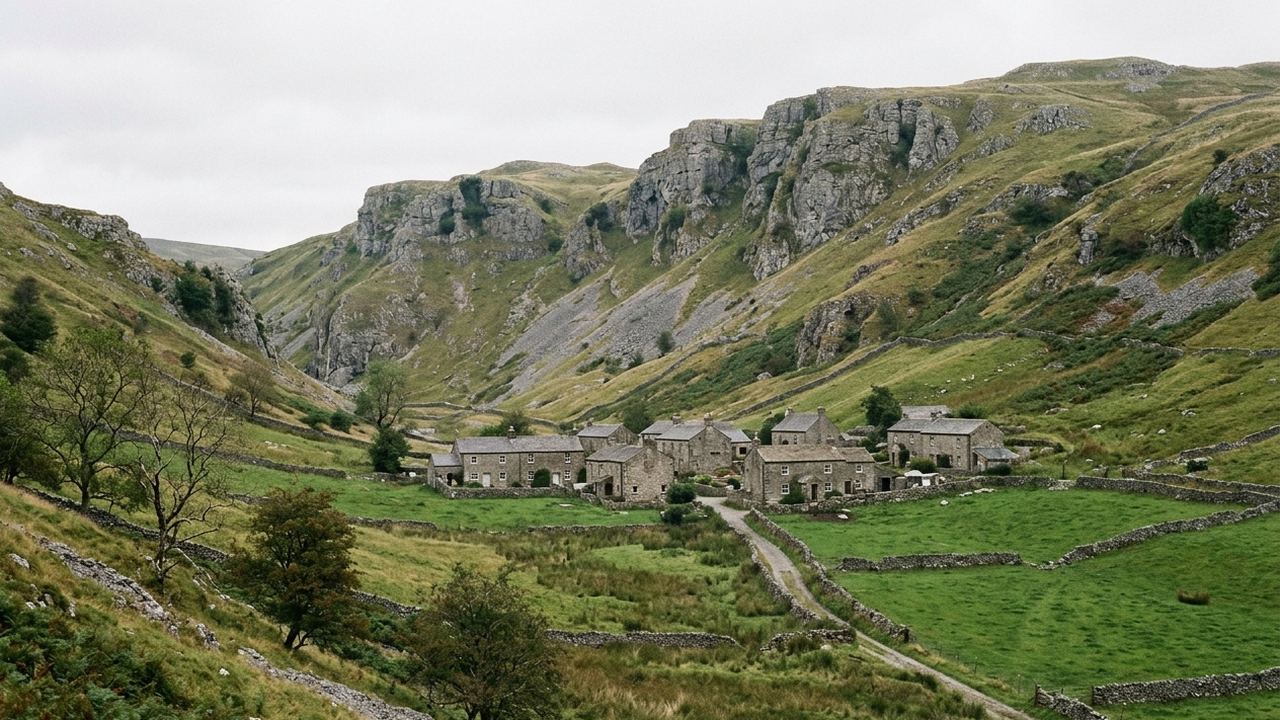
picos
The Picos sit about 20 miles inland from the Atlantic and take roughly 55 to 65 inches of rain a year; the Alpujarras sit on the dry southern flank of the Sierra Nevada, around 30 miles from the Mediterranean. Days here run 2,300 to 4,600 feet of ascent on limestone, karst and scree; the walking week in the Alpujarras is built on old irrigation channel paths and mule tracks with gentler daily gain. July and August here are the two most reliable months and are the ones that fill first; the southern week runs longest in spring and fall because midsummer heat pushes walkers to dawn starts. This week is $2,340 per person against the Alpujarras week's own floor, and includes one cable car ascent, which the southern week has no equivalent of.
from $2,340 per person
alpujarras
The Alpujarras season runs October to May and the Picos season runs June to September, so the two weeks do not compete for the same months; daily ascent here sits between 1,300 and 2,400 feet against 2,500 to 4,000 feet in the Picos; the ground is terraced farmland and irrigation channel with hard surfaces underfoot, not limestone gorge and scree; Malaga to the first village is about 2 hours by road, Bilbao or Santander to the Picos is 2 to 3 hours; the floor here is $2,090 per person and the two weeks are priced within a few hundred dollars of each other.
from $2,090 per person
Two figures set beside each other are two facts about two different trips of different lengths, run by different companies, in different seasons. Neither figure is offered as the better value and this office will not say that one is. What each covers is listed on its own page.
The calendar does most of the deciding
The northern week runs from mid June to the end of September. Before that, snow lies in the higher passes and the refuges on the high route are shuttered; after it, the cloud that comes off the Bay of Biscay sits on the massif for days at a time and the views people came for are not there. Within that window the ground is green, the meadows are cut for hay in July, and afternoon rain is normal rather than remarkable. Roughly 1,200 to 1,500 mm of rain falls on this range in a year, most of it outside the walking window but enough of it inside to matter.
The southern week runs from October to the end of May, with March and April the most requested. In those months the daytime walking is in the 55 to 70 degree range, the almond blossom is out in February, and the irrigation channels that thread the villages are running. July and August in the same valleys push past 95 degrees on the low paths by mid morning, which is why the week is not offered then. Snow sits on the summits above the route from December, but the route itself stays open.
So a walker with a fixed August week and a walker with a fixed Easter week are not, in practice, making the same decision. They are each being handed one option and a set of reasons why the other is shut.
Ascent, gradient, and what happens to the luggage
mid June to end September, seven walking daysseason
October to end May, seven walking days
1,800 to 3,000 feet, with one day near 3,600ascent per day
1,100 to 2,000 feet, spread across more, shorter climbs
limestone, loose scree on two descents, poles strongly suggestedground underfoot
packed earth and cobbled mule track, one scree section all week
a 2,400 foot climb over 2.4 miles, no shadesteepest sustained section
a 1,300 foot climb over 2.8 miles, chestnut shade most of the way
moved by road on five of seven days; two nights are reached on foot only, so a small pack is carriedluggage
moved by road every night, day pack only
7 to 12 miles between overnight stopsvillage spacing
4 to 8 miles between overnight stops
mostly 3,300 to 6,500 feetaltitude of the walking
mostly 3,000 to 5,000 feet
from $2,180 per person, seven nights, half boardprice
from $1,740 per person, seven nights, half board
The two figures above are for different lengths of walking day, different lodging standards and different luggage arrangements, and they are not a comparison of value. State them as what they are: two numbers this office can put in writing for a given set of dates.
Neither of these is what some people are describing
Three or four times a season somebody arrives at this question and, once the details come out, is not looking for either week. The tell is usually in what they say they want to see rather than what they say they want to do.
What happens next is yours to decide
This office is not going to tell you which of the two to take, and would be guessing if it did: the ascent figures suit some knees and not others, and the months are a matter of your own calendar and nobody else's. What the desk will do instead is put both weeks in writing against the dates you actually hold, with the daily ascent, the luggage arrangement and the full figure for each, on one sheet so they can be read side by side. If only one of the two is running in your window, you will be told that plainly rather than sold the other. Send your dates and the number of people and it will come back written down.